
CASE — Wayfinding & Environmental Design
Redefining the recycling experience
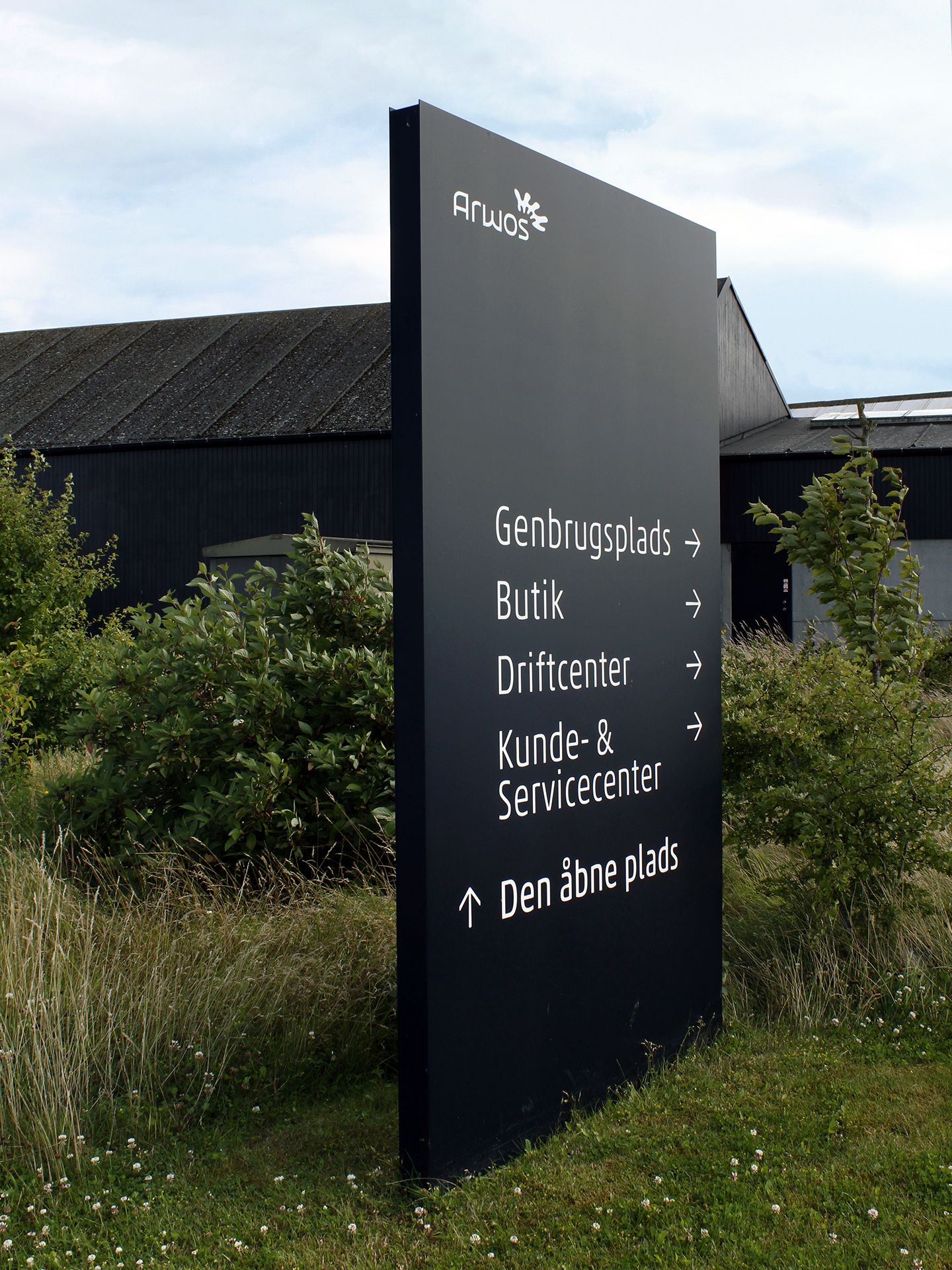
The pioneering Arwos project redefined the recycling experience. By consolidating all municipal utility functions within a barn-inspired site rooted in local wood-building traditions, the facility combined cutting-edge waste-sorting technologies with a human-centered wayfinding system.
Friendly, illustrative signage and a collaborative tone turned a once stressful process into an intuitive experience. The system guided visitors through both space and process while supporting operational efficiency and reinforcing shared responsibility.
The Arwos facility quickly became a national reference for innovative recycling design. The pictograms developed here directly influenced Denmark and Sweden’s national recycling icon systems, now widely adopted across the region.
BACKGROUND
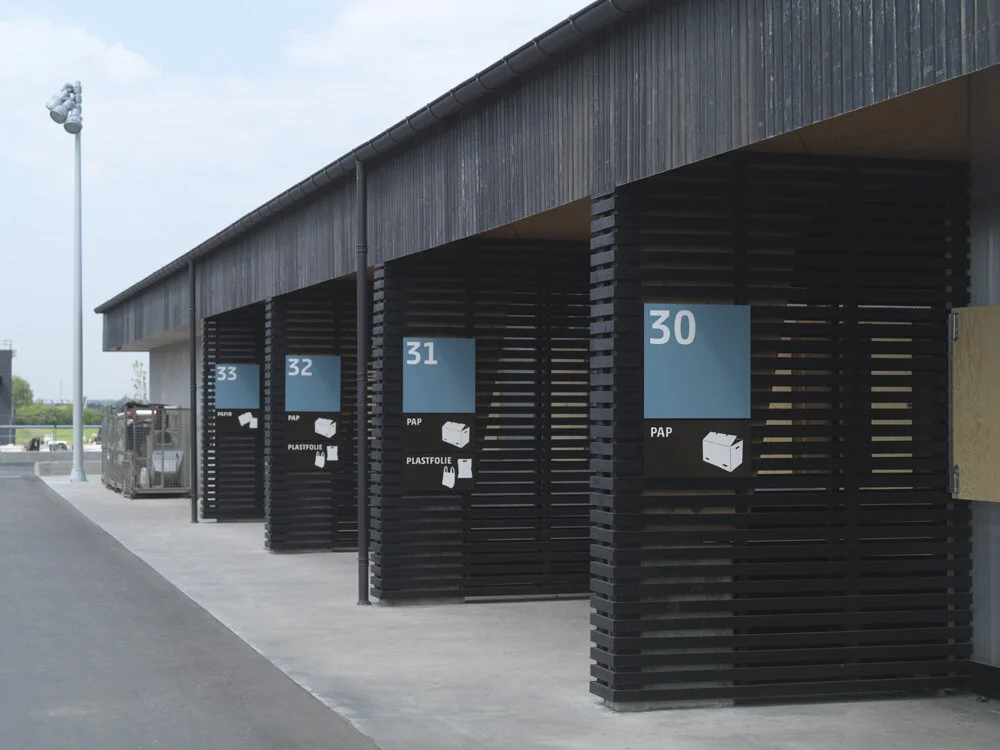
Timber buildings, inspired by traditional barns, created a calm and approachable setting for advanced waste-sorting technology. Architecture and signage were developed together, emphasizing clarity, flexibility, and shared responsibility.
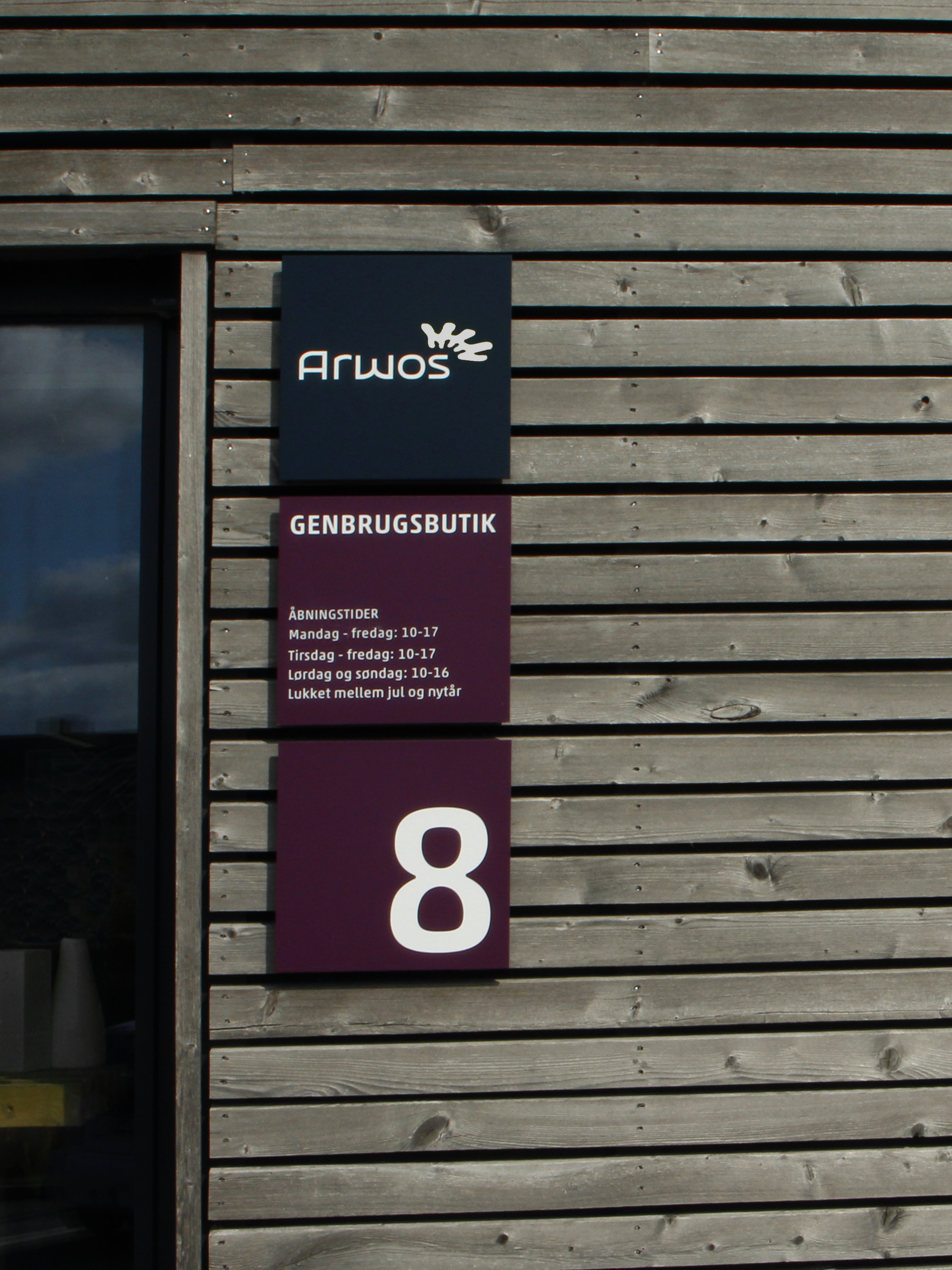
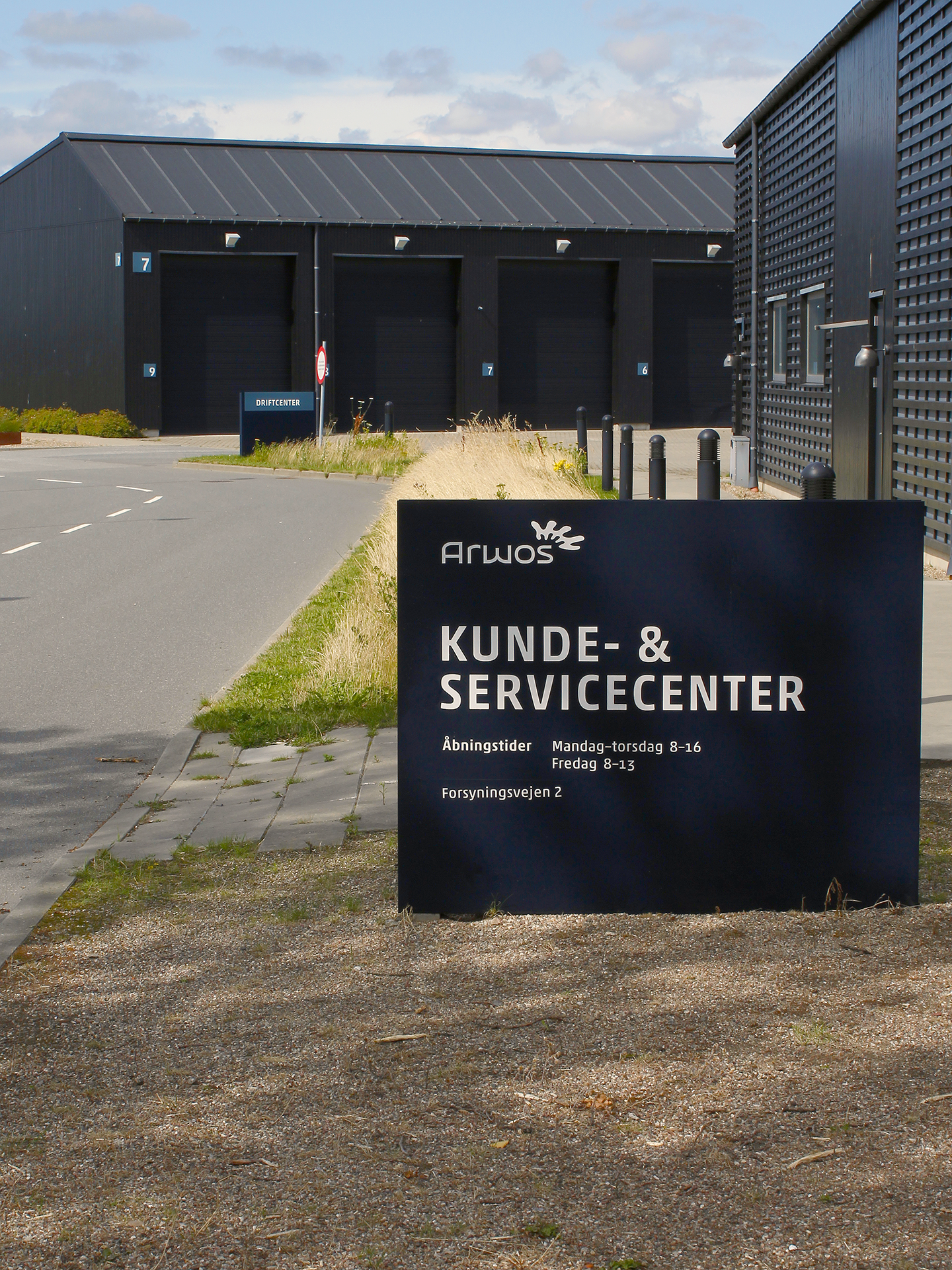
A site-wide color-zone system was introduced to aid orientation and distinguish different utility functions across the facility. Public areas, such as the recycling and thrift store, were clearly differentiated from professional zones for water supply, wastewater management, and administration.
CHALLENGE
Insights revealing ongoing friction
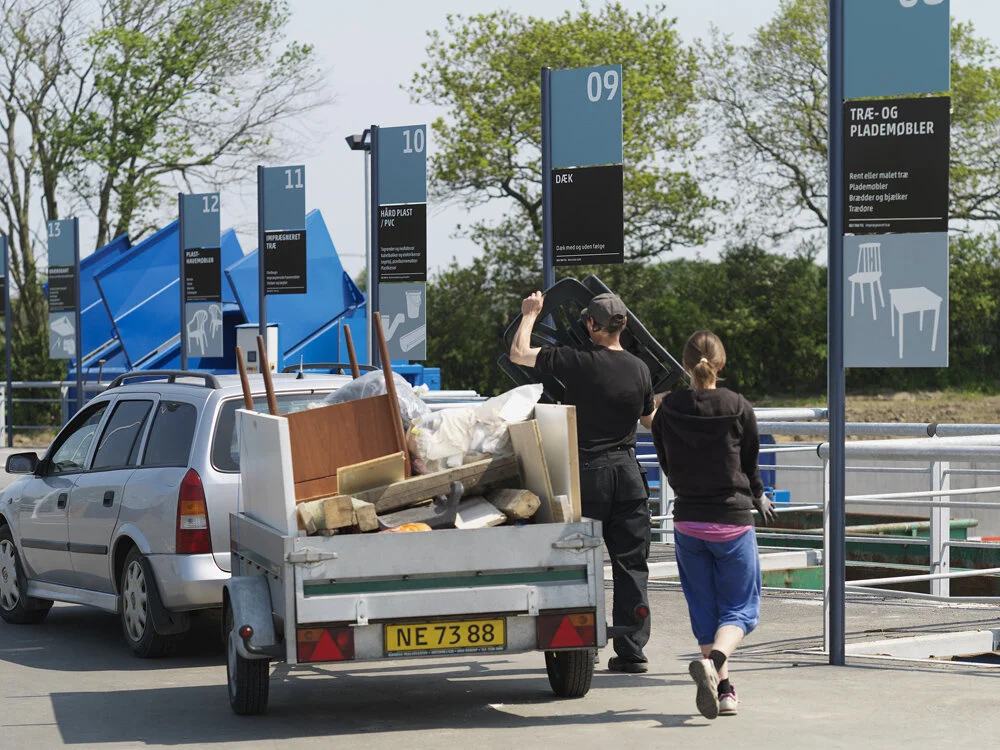
Interviews at the old facility revealed persistent tension: visitors struggled with multi-fraction recycling, causing mistakes and stress. This insight shaped the wayfinding system—it had to guide people physically and reshape behavior, making recycling intuitive and collaborative.
From the outset, the project aimed to redefine how people experience recycling, and the visual system was designed to guide visitors both through space and through the recycling process.
STRATEGY
The new design system combined two complementary strategies:
1. Guiding people through space
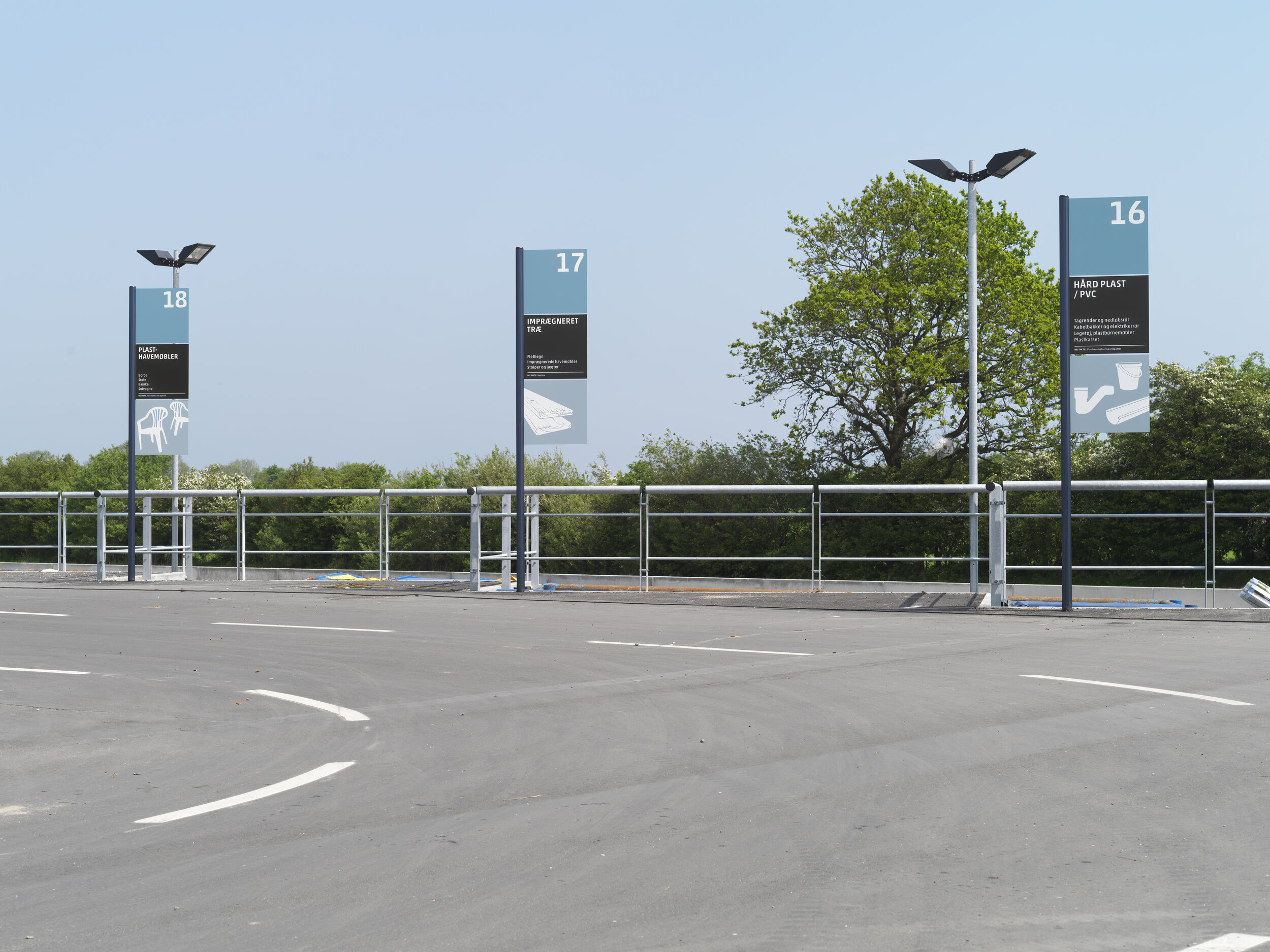
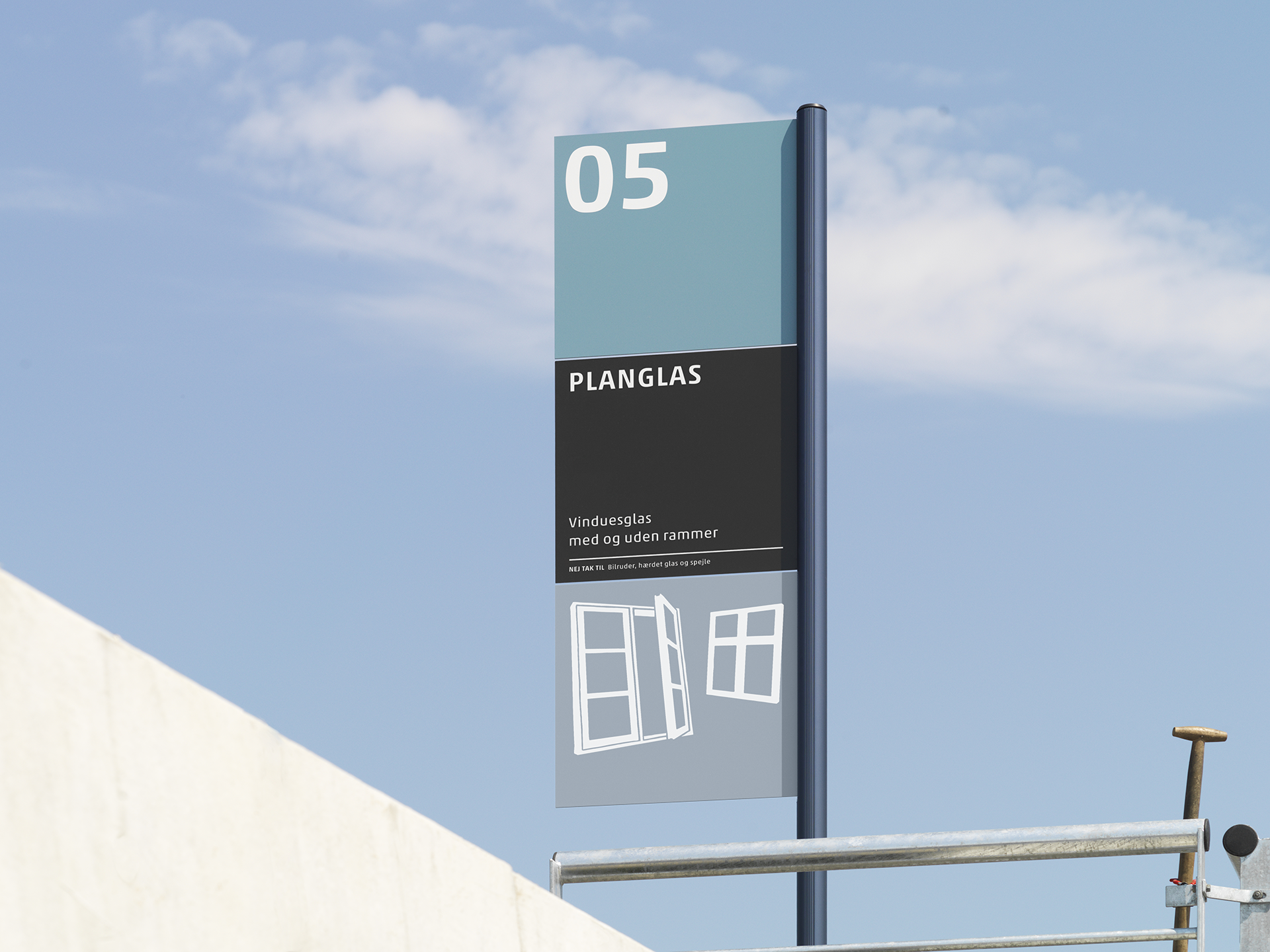
Clear, scalable signage directed pedestrians, vehicles, staff, and visitors, fully integrated into the architecture.
2. Guiding people through a process
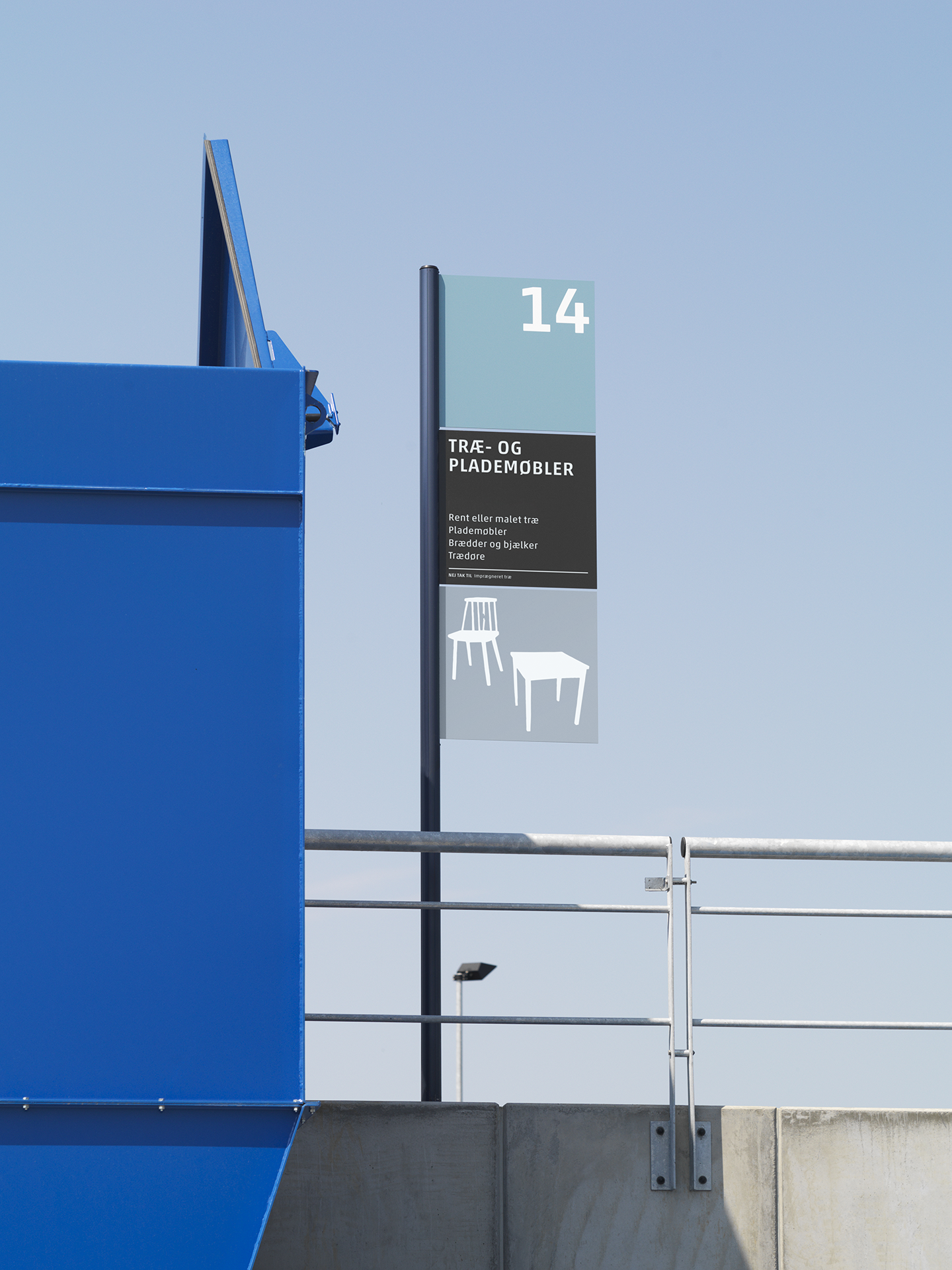
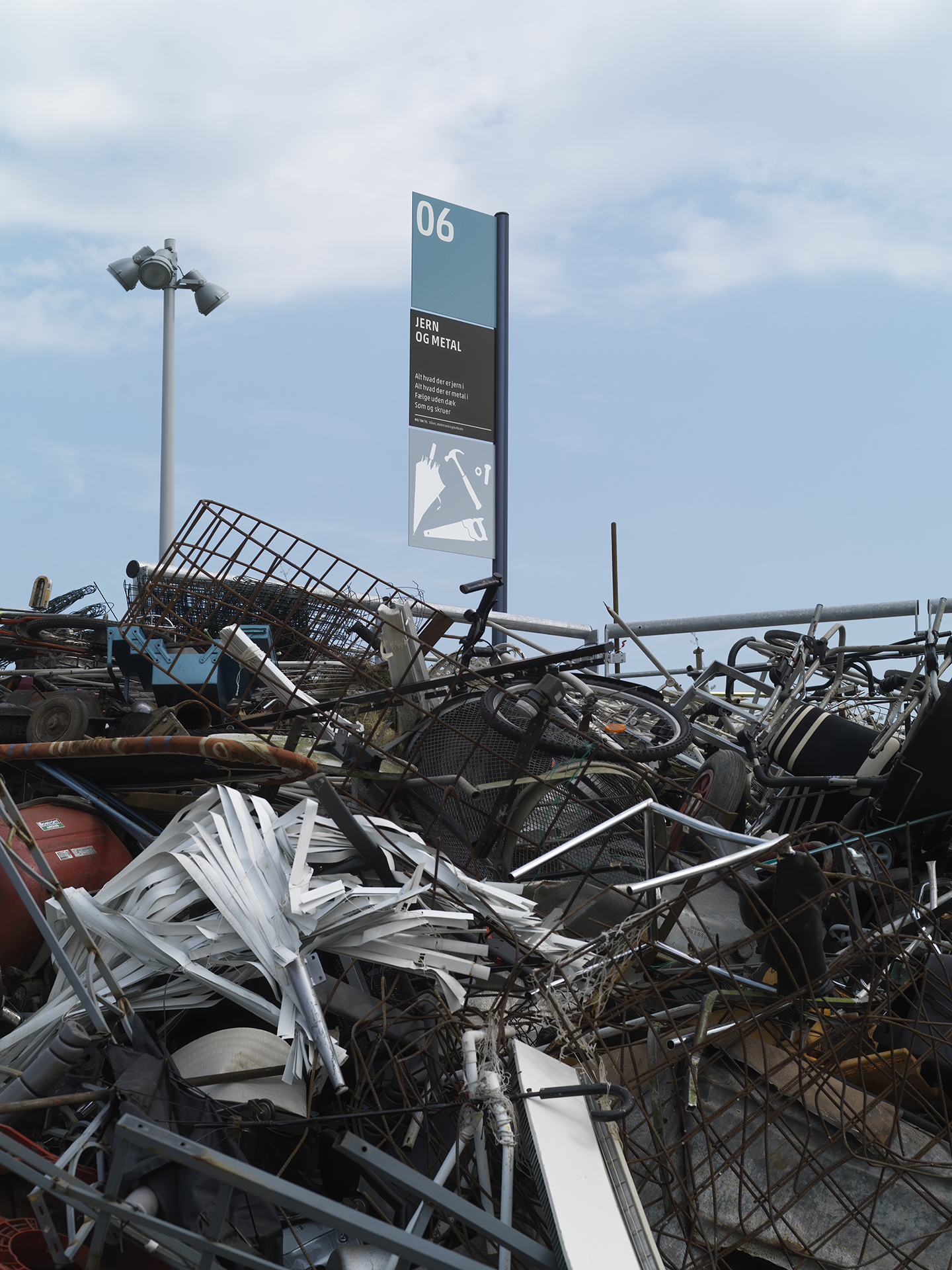
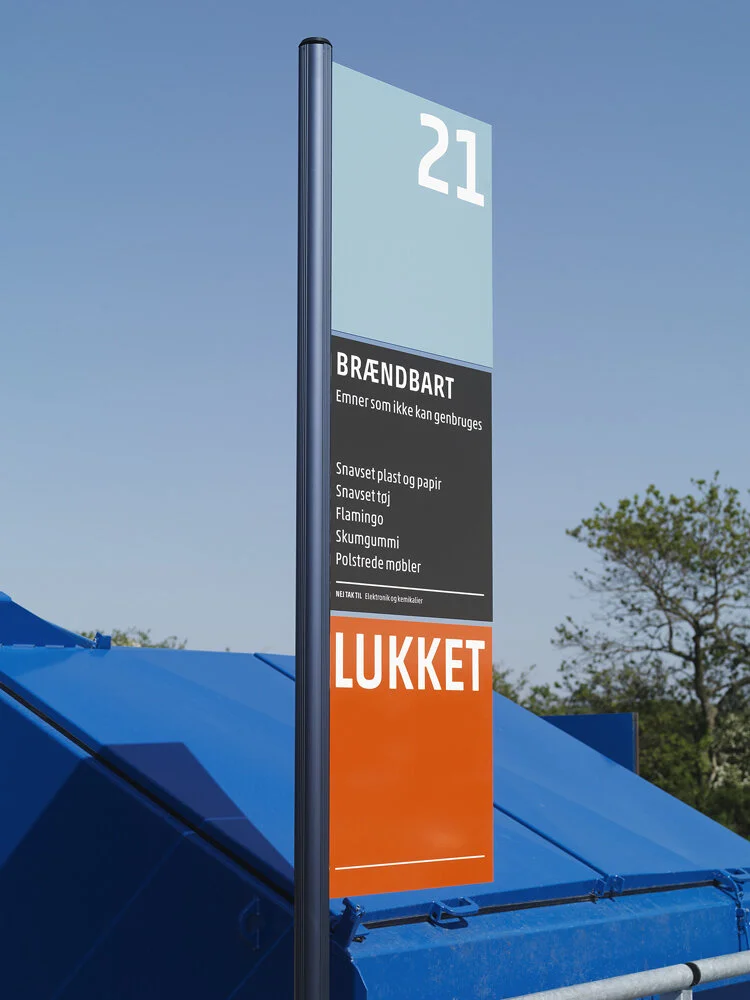
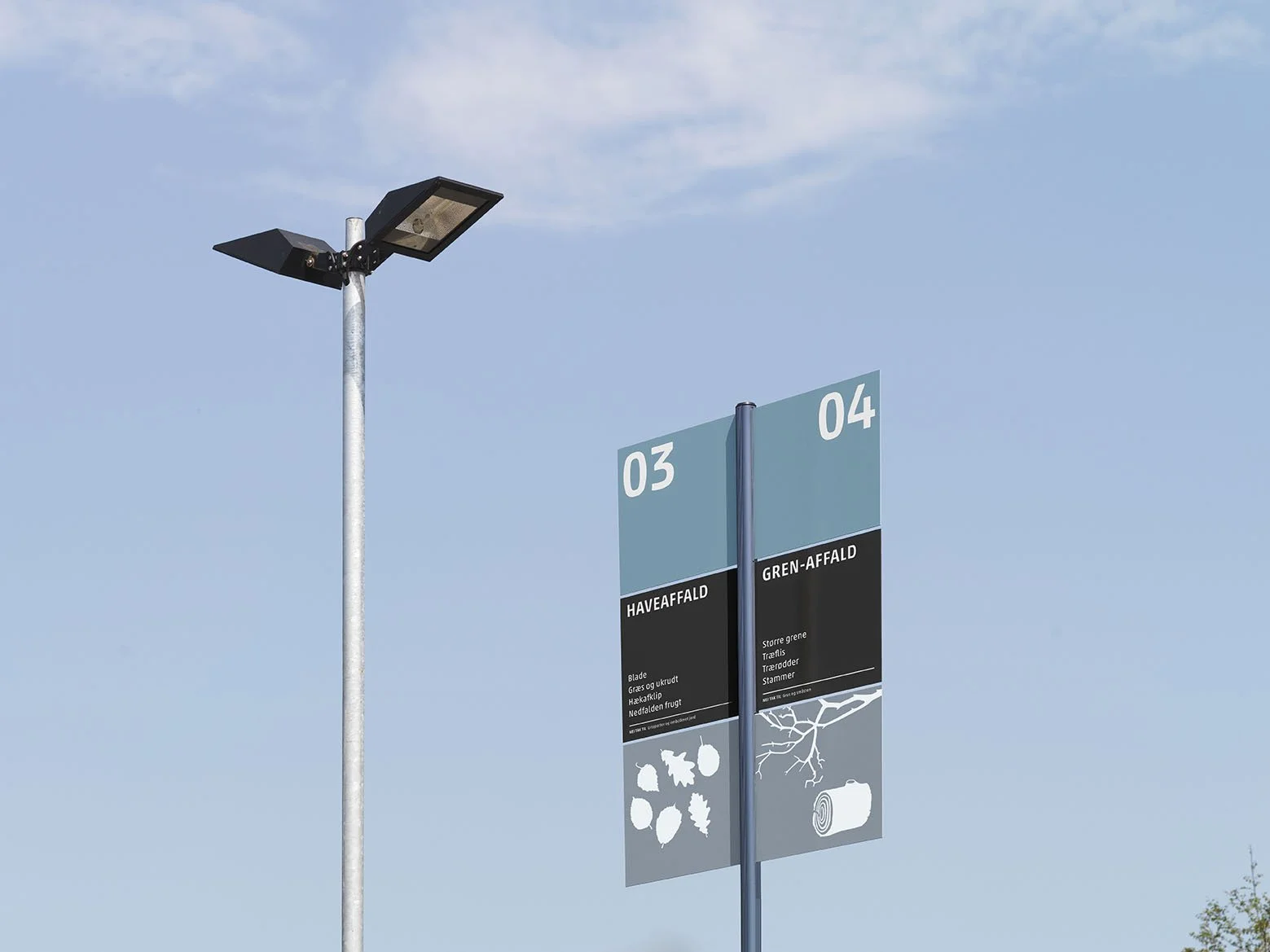
Shaping behavior: Intuitive visual cues and friendly pictograms helped visitors sort correctly, making staff facilitators rather than enforcers and framing recycling as a shared effort.
APPROACH
Designing collaboration into the system
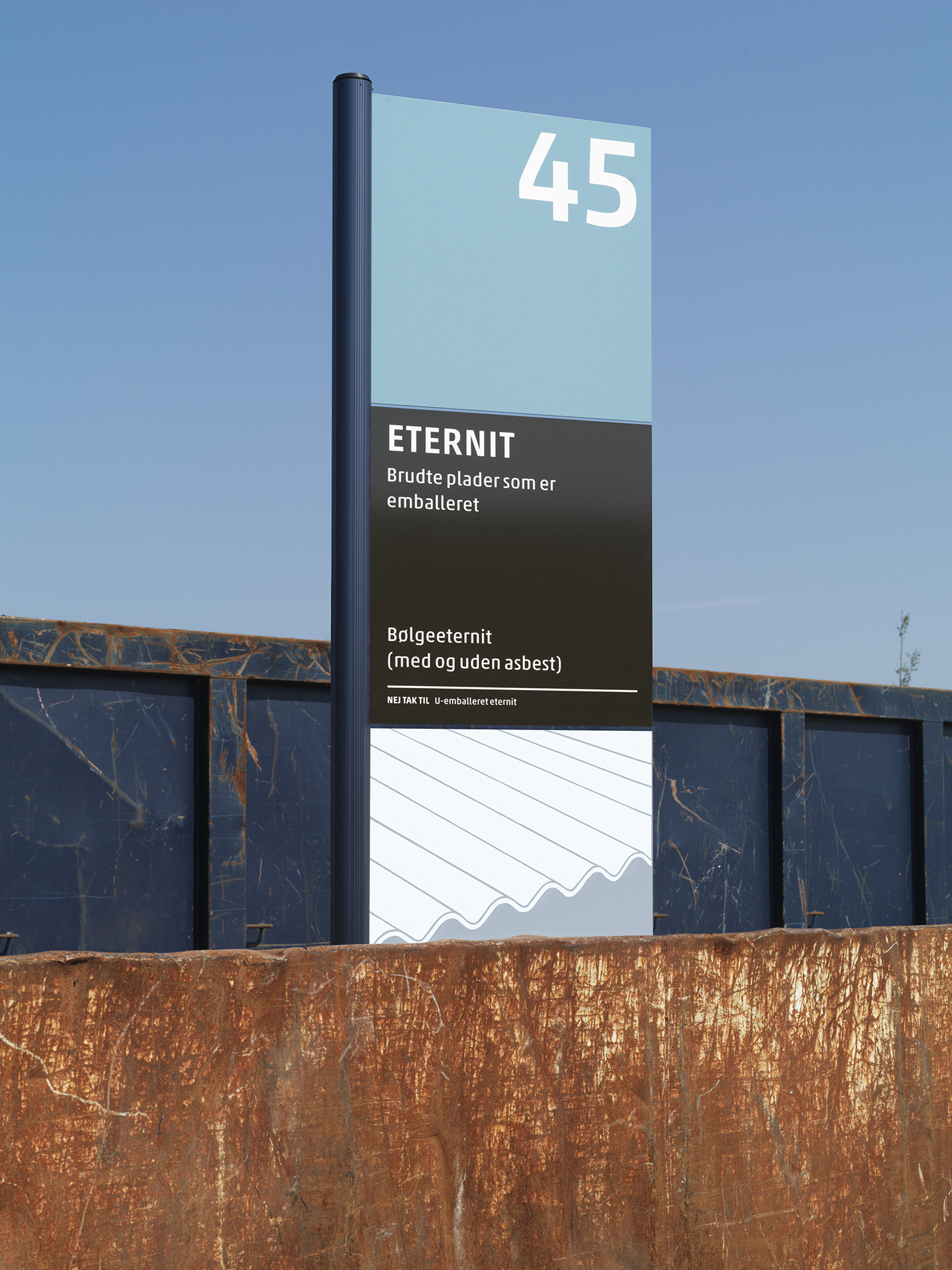
Friendly colors and illustrative icons, inspired by contemporary street art, softened the system’s authority and encouraged collaboration. Signage reduced friction between staff and visitors, turning everyday sorting into a shared effort guided by staff rather than enforced by them.
IMPACT
From Local Experiment to National Reference
The new Arwos facility quickly became a model for recycling design, attracting professional visitors from Denmark and abroad.
The wayfinding system and pictograms influenced national recycling icon systems in Denmark and Sweden, now (in a slightly simplified version) widely used across the region.
The project demonstrates how design, rooted in research and integrated with architecture, can transform everyday interactions, making sustainable practices intuitive, efficient, and collaborative.
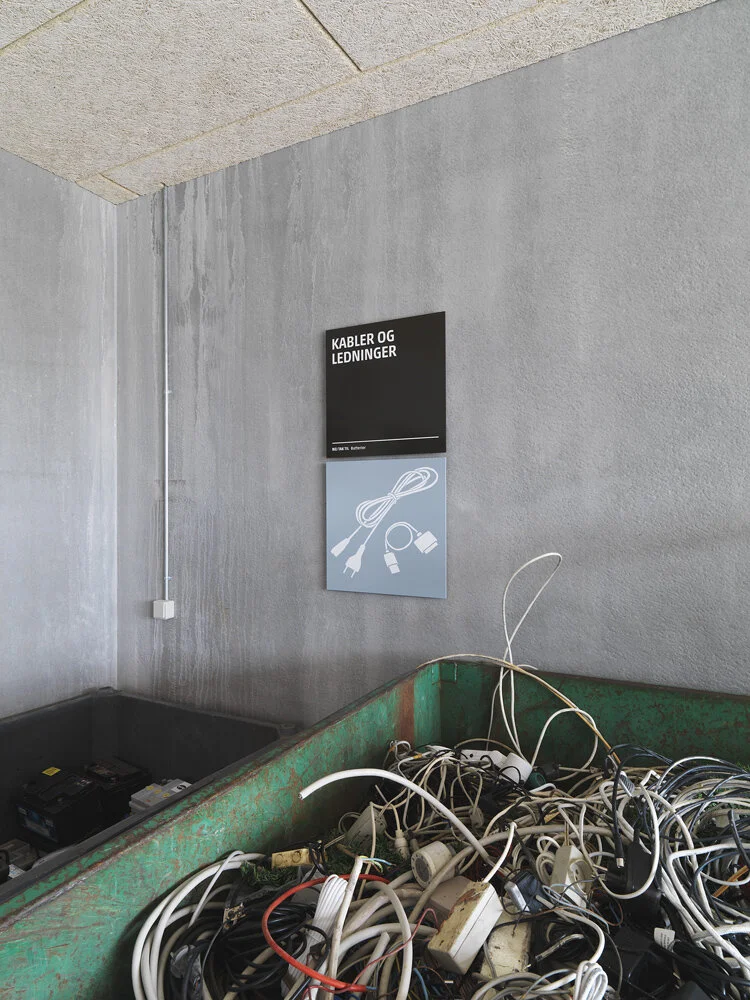
The Arwos project redefined the recycling experience, transforming a stressful, confusing process into an intuitive and collaborative system. Grounded in user research and behavioral insights, the wayfinding and signage guided visitors through both space and process, while reinforcing shared responsibility.
Integrated with wooden architecture and a flexible color-zone system, the design positioned staff as facilitators and shaped the overall service experience. The facility became a national reference, influencing recycling icon systems in Denmark and Sweden.
Wayfinding & Environmental Design
Client: Arwos Utility Company, Aabenraa Municipality
Project: Integrated wayfinding and recycling signage system
Role: Wayfinding and service design consultancy
Period: 2012-2016
Collaboration: Fridbjørg Architects
Contributions
Wayfinding analysis, concept, and system design, including signage and pictograms
Strategy informed by user research, behavioral insights and spatial flows
Cohesive, intuitive navigation system integrated with architecture
Pictograms and signage designed for clarity, consistency, and adaptability
Architectural integration of signage
Environmental graphics reinforcing workplace culture and brand identity
Service design outcomes: reshaping visitor and staff interactions, making recycling intuitive, collaborative, and efficient